
What is Waterproofing? The Invisible
Layers Protecting Your Property

When you walk across a plaza deck, park in a multi-level garage, or work in a building with below-grade spaces, you’re literally standing on one of the most critical—yet completely invisible—building systems: waterproofing. This hidden layer of protection prevents billions of dollars in water damage annually, protects structural integrity, and keeps commercial buildings functional and safe.
But what exactly is waterproofing? How does it work? And why do some waterproofing systems last decades while others fail within years?
As a commercial waterproofing contractor with over 35 years of experience protecting buildings throughout Texas and beyond, we’ve seen firsthand how proper waterproofing makes the difference between a trouble-free building and an expensive maintenance nightmare. This comprehensive guide explains everything property owners, facility managers, and developers need to know about commercial waterproofing systems.
Understanding Waterproofing: Definition and Purpose
Waterproofing is the process of making a building structure or surface impervious to water penetration. Unlike water-resistant treatments that merely slow moisture infiltration, true waterproofing creates an impermeable barrier that completely prevents water from passing through, even under hydrostatic pressure.
Think of waterproofing as a building’s immune system against its most persistent enemy: water. While roofing systems protect against rain from above, waterproofing systems defend against water attacking from below-grade (groundwater), from the sides (lateral moisture), and from occupied surfaces above (plaza decks, balconies, parking structures).
Why Buildings Need Waterproofing
Structural Damage: Water penetrating concrete causes reinforcement corrosion, concrete spalling, and progressive structural deterioration. Foundation waterproofing failures can compromise a building’s most critical load-bearing elements.
Interior Damage: Failed plaza deck waterproofing or parking deck waterproofing allows water to reach occupied spaces below, damaging ceilings, walls, finishes, furnishings, and equipment.
Mold and Health Issues: Moisture intrusion creates ideal conditions for mold growth, compromising indoor air quality and potentially creating health hazards for building occupants.
Energy Inefficiency: Water-damaged insulation loses thermal performance, increasing heating and cooling costs while reducing building comfort.
Property Value Loss: Visible water damage, musty odors, and deferred waterproofing maintenance significantly reduce commercial property values and marketability.
The economic impact extends beyond repair costs. Lost rental income during remediation, tenant dissatisfaction, and potential liability claims make waterproofing failures expensive in multiple ways.
Waterproofing vs. Dampproofing: Critical Differences
Many people confuse waterproofing with dampproofing, but these represent fundamentally different levels of protection:
Dampproofing resists moisture vapor and protects against dampness or minor moisture contact. It cannot prevent water infiltration under pressure. Dampproofing typically involves applying asphalt-based coatings to foundation walls—acceptable only where hydrostatic pressure won’t occur.
Waterproofing creates impermeable barriers preventing water penetration even under significant hydrostatic pressure. True waterproofing systems are essential for below-grade spaces, occupied plaza decks, parking structures, and any areas where water infiltration could cause damage.
Building codes typically require waterproofing (not just dampproofing) for habitable below-grade spaces, green roofs, plaza decks over occupied areas, and parking structures. The cost difference between dampproofing and waterproofing pales compared to the cost of repairing water damage when inadequate protection fails.
Common Commercial Waterproofing Applications
Commercial waterproofing protects buildings in multiple critical locations. Understanding where waterproofing is needed helps property owners ensure comprehensive building protection.
Below-Grade Foundation Waterproofing
Foundation waterproofing protects basement walls, elevator pits, mechanical rooms, and other below-grade spaces from groundwater intrusion. Below-grade waterproofing faces unique challenges including constant hydrostatic pressure from surrounding soil moisture, limited access for future repairs once backfilled, and potential damage from backfill operations.
Proper foundation waterproofing typically combines waterproofing membranes (sheet-applied or liquid-applied), drainage systems to relieve hydrostatic pressure, and protection boards preventing mechanical damage during backfill. The waterproofing membrane selection depends on soil conditions, water table levels, and structural design.
Plaza Deck and Parking Deck Waterproofing
When occupied spaces exist below plazas, terraces, or parking decks, waterproofing becomes critical. These applications face demanding conditions including vehicle or pedestrian traffic loading, thermal cycling and UV exposure, drainage challenges across large areas, and freeze-thaw cycles with de-icing chemicals.
Plaza deck waterproofing and parking deck waterproofing systems must support traffic loads while maintaining watertight integrity. Failed deck waterproofing causes water infiltration to spaces below—often residential units, offices, or retail areas where interior damage becomes expensive and disruptive.
Traffic-rated waterproofing membranes, protective wearing courses, proper drainage design, and careful detailing at penetrations and perimeters all contribute to successful deck waterproofing installations.
Balcony and Terrace Waterproofing
Balcony waterproofing protects residential units, hotel rooms, or offices from water infiltration through elevated exterior surfaces. These smaller waterproofing applications seem simple but require careful attention to details including drainage at building connections, waterproofing terminations at door thresholds, expansion joints accommodating thermal movement, and substrate preparation on existing surfaces.
Balcony waterproofing failures create particularly difficult remediation scenarios since access often requires working around occupied units with minimal space for staging and materials.
Green Roof Waterproofing
Sustainable building design increasingly incorporates vegetated green roofs, but these systems demand robust waterproofing. Green roof waterproofing must resist root penetration from plants, support growing media weight and moisture, allow leak detection beneath vegetation, and provide decades of reliable performance since remediation after vegetation establishment becomes prohibitively expensive.
Root-resistant waterproofing membranes, proper drainage layers, and comprehensive leak detection capabilities characterize successful green roof waterproofing installations.
Elevator Pit and Mechanical Room Waterproofing
Below-grade mechanical spaces require specialized waterproofing protecting expensive equipment from groundwater infiltration. Elevator pit waterproofing prevents water accumulation around sensitive mechanical systems while mechanical room waterproofing protects HVAC equipment, electrical systems, and building controls.
These waterproofing applications often occur in occupied buildings where work must proceed with minimal disruption to elevator service or mechanical systems operation.

Types of Waterproofing Systems and Membranes
Modern commercial waterproofing employs diverse membrane systems, each offering specific advantages for particular applications. Understanding waterproofing system options helps building owners make informed decisions.
Liquid-Applied Waterproofing Membranes
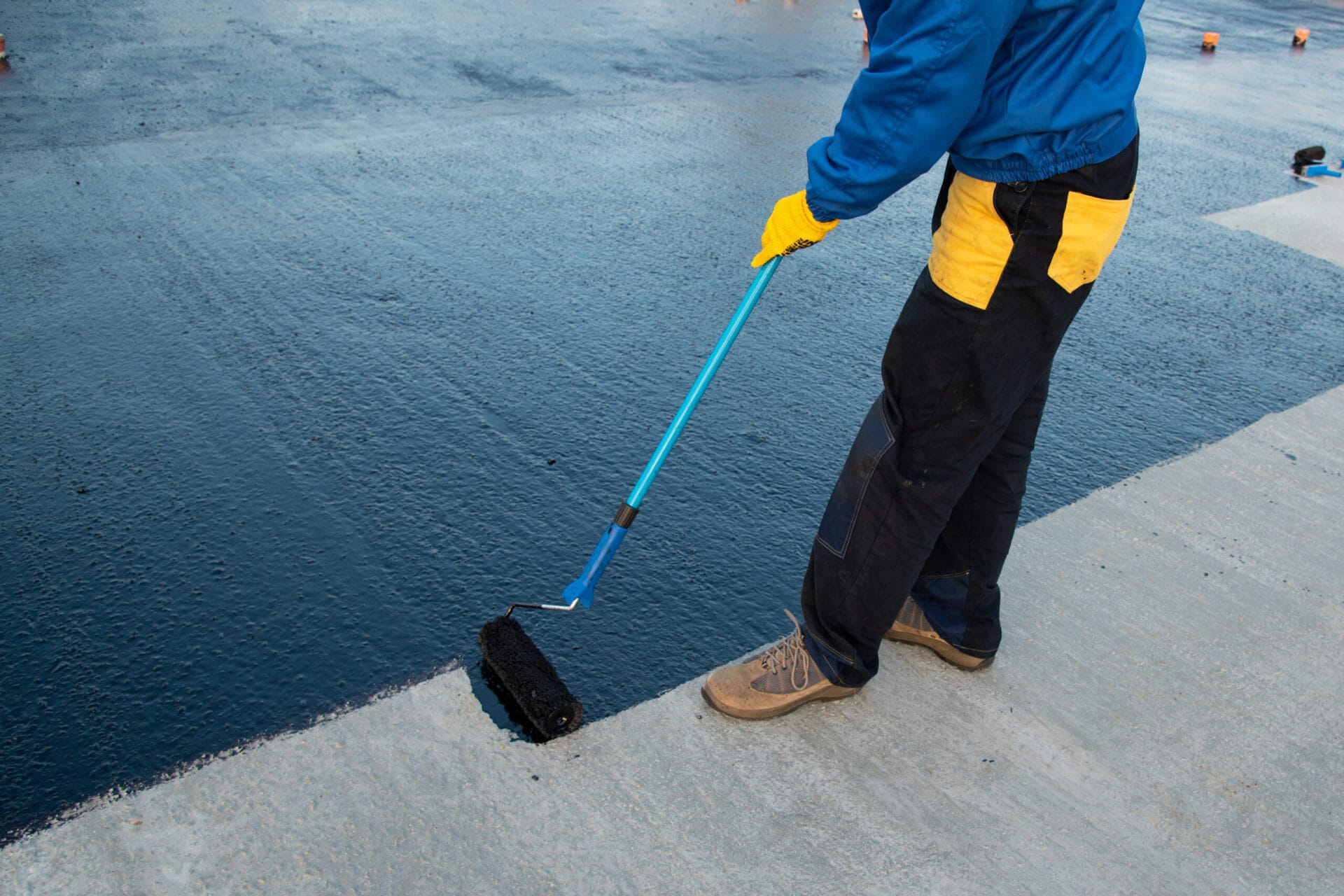
Liquid-applied waterproofing creates seamless membranes by spraying or rolling liquid products that cure into continuous barriers. These waterproofing systems excel at complex geometries, penetrations, and detailed conditions where sheet membranes prove difficult to install.
Polyurethane Waterproofing Membranes offer excellent elongation properties, strong adhesion to various substrates, and good chemical resistance. Polyurethane waterproofing works well for plaza decks, balconies, and elevated surfaces.
Polyurea Waterproofing Coatings provide rapid cure times (often minutes), exceptional durability and abrasion resistance, and superior chemical resistance. Polyurea waterproofing serves demanding applications including industrial containment, water tanks, and high-traffic areas.
Acrylic Waterproofing Membranes deliver UV stability for exposed applications, ease of application and repair, and lower cost for certain applications. Acrylic waterproofing appears in pedestrian plaza decks and certain vertical surfaces.
Liquid-applied waterproofing installation quality depends heavily on proper surface preparation, achieving specified wet film thickness, and appropriate curing conditions. Weather, substrate moisture, and ambient temperature all affect liquid waterproofing performance.
Sheet-Applied Waterproofing Membranes
Sheet waterproofing membranes provide proven reliability for large-area applications with consistent factory-controlled thickness and quality. Installation involves carefully overlapping and sealing sheets to create watertight assemblies.
Modified Bitumen Waterproofing combines asphalt with polymer modifiers for improved performance. These waterproofing membranes offer proven track records in below-grade applications, good resistance to hydrostatic pressure, and compatibility with protection boards and drainage systems.
TPO and PVC Waterproofing Membranes, while primarily roofing materials, also serve certain waterproofing applications including green roof base layers and specific foundation waterproofing situations.
EPDM Rubber Waterproofing provides flexibility and durability for vertical and horizontal surfaces with excellent elongation properties and long-term weather resistance.
Self-Adhered Waterproofing Membranes eliminate torching requirements through pressure-sensitive adhesives, offering safer installation and good performance in accessible applications. Sheet waterproofing success depends on proper seaming (heat welding, adhesive bonding, or solvent welding depending on material), termination details at edges and penetrations, and protection from construction damage.
Rubberized Asphalt Waterproofing
Rubberized asphalt waterproofing combines asphalt with rubber polymers creating highly flexible, self-healing waterproofing membranes. These systems demonstrate excellent adhesion to concrete substrates, ability to bridge hairline cracks, and proven performance in high-hydrostatic-pressure conditions.
Rubberized asphalt waterproofing appears in below-grade foundation applications where demanding conditions require robust protection. Hot-applied, cold-applied, and self-adhered rubberized asphalt options serve different project requirements.
Cementitious Waterproofing
Cementitious waterproofing products combine cement with polymers and specific additives creating rigid waterproofing barriers suitable for certain applications. These waterproofing systems work well for water tanks and reservoirs, elevator pits, and certain below-grade applications where rigid waterproofing proves acceptable.
Cementitious waterproofing advantages include easy application (trowel or spray), good performance in constantly wet conditions, and typically lower cost than membrane systems. However, cementitious waterproofing cannot bridge structural cracks and requires proper substrate preparation.
Crystalline Waterproofing
Crystalline waterproofing represents unique technology where products penetrate concrete and react with moisture and unhydrated cement to form crystals that block pores and capillaries. These crystals become integral with concrete, providing permanent waterproofing.
Crystalline waterproofing applications include new concrete construction (admixtures), existing concrete restoration (topical application), and concrete crack repair. The technology offers self-sealing properties where minor cracks can “heal” when crystallization continues.
How Waterproofing Systems Work: The Science of Protection
Understanding how waterproofing systems function helps explain why proper installation and system selection matter tremendously.

Barrier Waterproofing Systems
Most waterproofing membranes function as barrier systems—creating impermeable layers preventing water passage. These systems work by physical exclusion: water simply cannot pass through properly installed membranes.
Barrier waterproofing effectiveness depends on complete membrane continuity (no gaps or holidays), proper seaming creating watertight joints, appropriate terminations at transitions, and protection from physical damage.
Common barrier waterproofing failures occur at seams (improper welding or bonding), penetrations (inadequate detailing), terminations (incomplete edge sealing), and physical damage (punctures during construction).
Penetrating Waterproofing Systems
Penetrating waterproofing (including crystalline and certain sealers) works differently—modifying substrate properties rather than creating surface barriers. These systems reduce porosity by filling pores with crystals, polymers, or silicates and can “breathe” allowing moisture vapor transmission while preventing liquid water passage.
Penetrating waterproofing advantages include no applied membrane to damage, ability to apply from either surface (positive or negative side), and effectiveness on damp substrates in some cases.
However, penetrating waterproofing typically cannot bridge cracks, may not withstand high hydrostatic pressure alone, and performs differently across various concrete mixes and conditions.
Drainage and Waterproofing Integration
Effective waterproofing systems often incorporate drainage that reduces water exposure and hydrostatic pressure. Foundation waterproofing typically includes drainage boards and perimeter drains, plaza deck waterproofing incorporates drainage layers and proper sloping, and parking deck waterproofing features surface drains and drainage composites.
By reducing water contact and pressure on waterproofing membranes, integrated drainage extends waterproofing system service life and improves overall performance.
Investing in Invisible Protection
Waterproofing represents building infrastructure you’ll hopefully never think about—because it works silently and invisibly protecting your property investment. But this unseen protection deserves careful attention, quality materials, expert installation, and ongoing maintenance.
Water remains the most persistent and destructive force affecting buildings. Proper waterproofing systems defend against this constant threat, preventing structural damage, protecting occupied spaces, maintaining building value, and avoiding costly repairs.
Whether you’re planning new construction, evaluating existing building waterproofing, or addressing water infiltration problems, understanding waterproofing fundamentals helps make informed decisions protecting your property investment.